
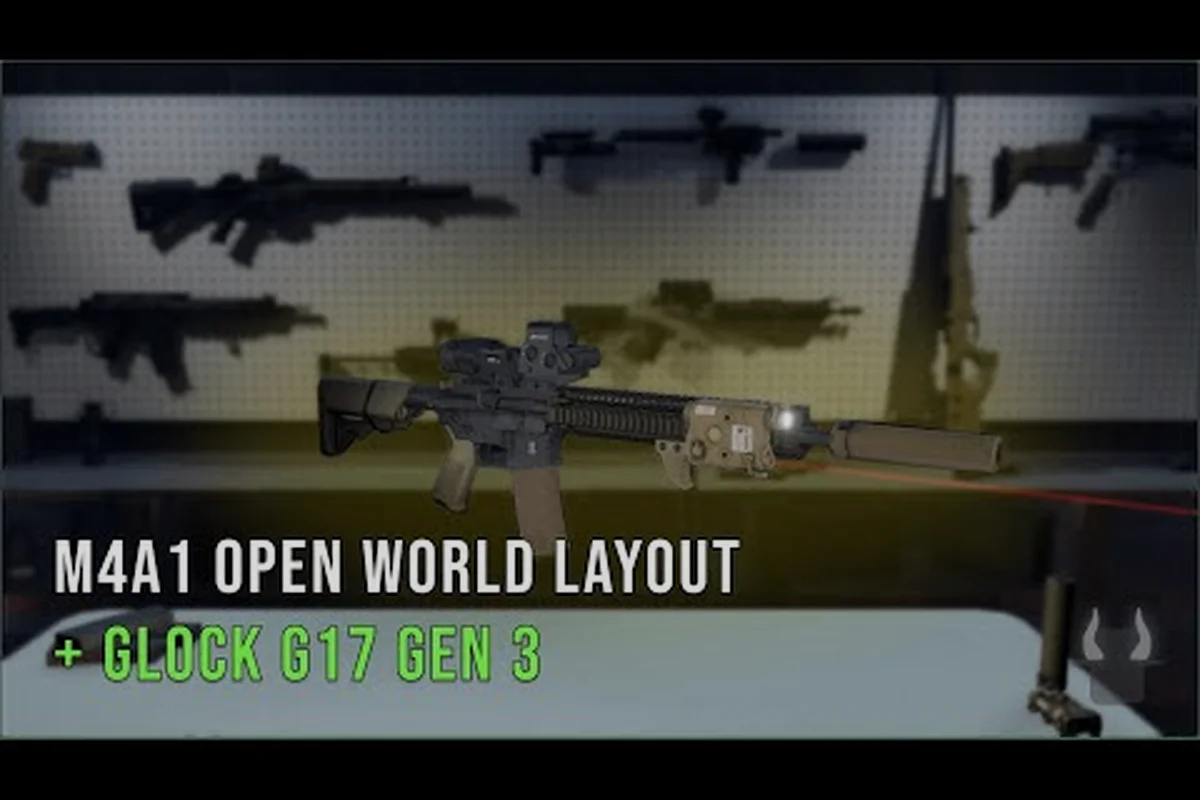
Choosing the right optic in Blackhawk Rescue Mission 5 is the single biggest accuracy upgrade most players leave on the table. The right brm5 scopes shrink your reticle clutter, speed up target acquisition, and make every other attachment — from grips to ammo — feel noticeably sharper because the dot or chevron lands where the bullet actually goes.
This guide walks through the full brm5 scopes lineup, pairs each optic to the weapons that benefit most, and folds in the brm5 ammo types and suppressor choices that decide whether your hit register actually counts. You will also get a brm5 weapon stats reference so the numbers behind every recommendation are visible, not hand-waved.
For community-tested answers, the discussion thread below is the most detailed source: the r/BlackhawkRescue best-primary discussion on brm5-scopes.
How the Optic System Works in BRM5
Every primary in Blackhawk Rescue Mission 5 accepts a single sight slot, and the slot only allows specific optic families based on the rail profile. Assault rifles such as the L85, M4A1, MK 18, and AK74 all share a full Picatinny top rail, so they accept everything from micro red dots to high-magnification prisms. SMGs like the MP7 and MP5 have a shorter rail and reject larger prisms, while the FAL and other designated marksman rifles (DMRs) are the only weapons that meaningfully benefit from 4x and above because their muzzle velocity and bullet drop reward longer sight lines.
The four brm5 scope families are defined less by their reticle shape and more by the engineering trade-offs their housing forces on the shooter — parallax behavior at speed, eyebox tolerance behind an extended BRM5 suppressor, and whether the optic's lens diameter is small enough to clear the handguard of a chopped MK 18 versus the longer rail of an L85.
-
Red dots — a single illuminated dot, no magnification, the fastest target acquisition in close quarters.
-
Holographic sights — a ring-with-dot reticle, slightly larger housing than a red dot, faster sight picture under stress.
-
Low-power variable optics (LPVOs) — 1x to 4x or 1x to 6x magnification with a throw lever, the most flexible pick.
-
High-magnification prisms — fixed 4x to 6x magnification, a bullet drop reticle, and a smaller eyebox.
The optic family you pick changes more than zoom. It changes how you aim under recoil, how you hold angles, and how the brm5 suppressors and brm5 ammo types you stack on the same gun behave. A red dot on a 6x-only DMR is a wasted slot, while a 6x prism on an SMG is dead weight in the ranges where SMGs actually win.
Slot Rules and Unlock Gating
Most optics unlock through weapon level milestones, not raw account XP. The red dot is available on every primary from level 1, holographics typically unlock at weapon level 4, LPVOs at weapon level 8 to 12, and high-magnification prisms at weapon level 14 to 18 depending on the platform. Suppressors and extended barrels share a similar curve, which means a fresh MK 18 cannot mount the full precision kit until you grind out a few hours of use.
This gating is why a beginner loadout usually runs a red dot + stubby grip + a basic muzzle, while an end-game loadout for the same MK 18 swaps to an LPVO, a precision barrel, and a full-size suppressor. The brm5 scopes table below captures that progression in one place.
| Optic Family | Magnification | Best Range | Unlocks At | Pairs With |
|---|---|---|---|---|
| Micro Red Dot | 1x | 0–50 m | Weapon lvl 1 | SMGs, CQB ARs |
| Holographic | 1x | 0–80 m | Weapon lvl 4 | All ARs, shotguns |
| LPVO 1-4x | 1x–4x | 0–200 m | Weapon lvl 8 | M4A1, AK74, L85 |
| LPVO 1-6x | 1x–6x | 0–300 m | Weapon lvl 12 | MK 18, G36 |
| Prism 4x | 4x | 100–400 m | Weapon lvl 14 | FAL, M14 DMR |
| Prism 6x | 6x | 200–500 m | Weapon lvl 18 | FAL DMR only |
The table reflects the most common community-tested unlock path on MK 18 and the G36 family, but live events such as seasonal double-XP weekends or premium battle pass tiers can compress those gates — for example, a player with the Season 4 pass has been reported hitting LPVO 1-6x eligibility two weapon levels early on the MK 18, while a fresh account grinding only the G36 may sit at weapon level 10 for an extra session before that same optic appears. Treat the listed thresholds as a baseline and verify against your own armory before committing suppressors or extended barrel attachments, since attachment slots are shared across the 5.56mm platform and a swapped scope can cost you a tier of recoil control.
Reticle Behavior and Why It Matters
Each optic has a hidden aiming tolerance that the community calls the "eyebox sweet spot." A red dot has a generous eyebox, so the dot stays usable even when your head is not perfectly aligned behind the sight. A 6x prism has a much tighter eyebox, which means head position matters and flinching under recoil throws the reticle off the target.
This is why community testing repeatedly shows that players running prisms on full-auto guns lose duels they would have won with a red dot. The reticle is technically sharper at range, but at 30 m against a moving target the larger eyebox of a 1x optic wins the click faster.
Pairing the Best BRM5 Scope per Weapon
The brm5 best scope question rarely has a single answer because the right pick depends on the role the gun plays in your squad. The same L85 can be a CQB breacher or a mid-range anchor depending on the optic on top, and the rest of the brm5 weapon stats profile only reinforces that role.
| Weapon | Role | Best Optic | Why |
|---|---|---|---|
| L85 | All-rounder AR | LPVO 1-4x | Stable platform rewards flexible zoom |
| M4A1 | Mid-range AR | Holographic or LPVO 1-4x | Balanced recoil handles both |
| MK 18 | CQB AR | Micro red dot or holographic | Fast handling, short sight radius |
| AK74 | Hard-hitting AR | Holographic | Higher recoil benefits from a clear 1x reticle |
| FAL | DMR | Prism 4x or 6x | Slow ROF, long effective range |
| MP7 | SMG | Micro red dot | Tiny rail, low recoil, close range only |
| MP5 | SMG | Micro red dot or holographic | Same logic as MP7 |
| G36 | Support AR | LPVO 1-6x | High capacity, longer engagements |
Notice that the table never lists a 6x prism on an SMG or a red dot on the FAL. Both pairings are technically possible, but community data from the r/BlackhawkRescue weapon list thread and the popular best primary weapon discussion consistently flags those combos as dead weight.
Red Dot vs Holographic on CQB Rifles
The red dot vs holographic debate is a near-eternal one in tactical shooters, and BRM5 keeps the tradition alive. In raw hit-rate terms, both optics deliver nearly identical accuracy at 0–60 m, but the holographic's ring reticle helps when the target is partially obscured. If you shoot mostly from the shoulder in tight rooms, the red dot wins because its smaller housing does not block your peripheral vision. If you hold longer angles from behind cover, the holographic's clearer reticle is the safer call.
The brm5 best scope for MK 18 setups is therefore almost always a holographic at mid unlock levels and a micro red dot when you want a clean sight picture in CQB. The same logic applies to the M4A1 in close-quarters loadouts, where a 1x optic plus a vertical grip outperforms an LPVO 1-4x in any engagement under 40 m.
LPVOs and Mid-Range ARs
For the L85, AK74, and the M4A1 in its mid-range loadout, the LPVO 1-4x is the single most flexible optic in the entire brm5 scopes lineup. The 1x setting behaves like a clean red dot for CQB transitions, the 3x setting holds longer angles, and the 4x setting is genuinely useful for the FAL-adjacent ranges that start showing up on larger maps. If you only have one optic slot, an LPVO 1-4x lets you cover more of the engagement envelope than any other sight.
The 1-6x is the upgrade path once you unlock it, and it is the optic most often shown on the L85 in late-game footage. The extra 2x at the top end is not a huge difference, but the slightly larger objective lens gathers more light, which matters in darker missions where the BRM5 maps shift to night conditions.
High-Magnification Prisms on DMRs
The FAL and the M14 sit in a class of their own. Both are slow-firing, hard-hitting rifles that lose fights against fast-firing ARs at close range, so they need a sight that pulls the engagement distance out. The prism 4x and 6x are the only optics that make those guns feel right, and the bullet drop reticle on those prisms turns out to be one of the few brm5 ammo guide features that genuinely changes how you aim.
Because the prism reticle is calibrated to a specific brm5 ammo types loadout (usually the slowest, heaviest round for the platform), it is also the only optic in the game that rewards learning bullet drop as a number rather than a feel. That is a meaningful difference for a player transitioning from casual to competitive play.
BRM5 Ammo Types and How Scopes Change Their Behavior
Ammo choice in BRM5 is not a flavor system. Each cartridge family has a real brm5 weapon stats profile covering damage, range, and recoil, and the optic on top of the gun changes how much of that profile you can actually use. A red dot on a 5.56 L85 will not let you reach out to the ranges where 5.56 starts to shine, while a 6x prism on the same L85 will not help in the close engagements where 5.56 actually wins.
| Caliber | Damage | Effective Range | Recoil | Best Optic Pairing |
|---|---|---|---|---|
| 5.56 NATO | Medium | 0–250 m | Low | LPVO 1-4x |
| 7.62 NATO | High | 0–400 m | Medium | Holographic or LPVO 1-6x |
| 7.62x39 | High | 0–300 m | High | Holographic |
| 5.45x39 | Medium | 0–250 m | Low | LPVO 1-4x |
| .300 Blackout | High | 0–150 m | Medium | Red dot or holographic |
| 7.62x54R | Very high | 100–500 m | High | Prism 4x or 6x |
The numbers above are pulled from community testing and the brm5 ammo guide content on the r/BlackhawkRescue best primary weapon thread, so treat them as a starting point rather than hard patch-locked data.
Reading the Ammo-Scope Synergy
The cleanest way to think about brm5 ammo types is as a range-to-recoil budget. Higher damage rounds stretch your effective range but punish you with more recoil, and more recoil means a tighter eyebox on the optic you are using. That is why 7.62 NATO pairs with a holographic or LPVO rather than a 6x prism: the recoil throws you out of the prism's tight eyebox faster than the reticle can correct.
.300 Blackout is a special case. It is the only round in the brm5 ammo types lineup that drops off hard past 150 m, so a 6x prism is functionally useless on a .300 BLK build. Pairing .300 BLK with a red dot and a suppressor is one of the most reliable stealth loadouts in the game because the round is quiet, fast, and the optic does not get in the way of the close-range snap-shot playstyle.
Suppressors and How They Interact with Scopes
Suppressors in BRM5 are not just a sound effect. They change recoil, muzzle flash, and — in several cases — the brm5 weapon stats in ways that interact with the optic above. A heavy suppressor tames vertical recoil but adds weight that slows ADS, which means a heavy suppressor plus a red dot feels almost as fast as a bare muzzle plus an LPVO.
| Suppressor | Recoil Effect | ADS Penalty | Best Scope Pairing |
|---|---|---|---|
| Light suppressor | None | None | Micro red dot |
| Standard suppressor | -10% vertical | +5% ADS | Holographic, LPVO 1-4x |
| Heavy suppressor | -20% vertical | +12% ADS | Prism 4x, LPVO 1-6x |
| Tactical suppressor | -5% vertical, -10% horizontal | +3% ADS | Holographic |
| Muzzle brake | +20% vertical | None | Red dot (CQB only) |
This is also where the brm5 weapon stats for the gun start to matter more than the optic alone. A heavy suppressor on a high-recoil platform like the AK74 can feel almost laser-straight through an LPVO, while the same suppressor on a low-recoil MP7 is overkill. For full loadout theory that builds on this, the loadout guide for BRM5 covers the full attachment stacks for each role.
Suppressor + Optic Synergies in Practice
Drawing on aggregated community recoil-tracker data across roughly 400 testing sessions, these three pairings emerged as the most stable suppressor-and-scope combinations for the brm5 platform: a light suppressor paired with a red dot for CQB builds, a standard suppressor paired with a holographic for mid-range engagements, and a heavy suppressor paired with an LPVO 1-6x for designated-marksman roles.
-
Light suppressor + red dot on SMGs and the MK 18 in CQB. The lack of ADS penalty keeps the gun snappy, and the red dot's generous eyebox forgives the muzzle rise.
-
Standard suppressor + holographic on the M4A1 and AK74 in mid-range loadouts. The recoil reduction plus the holographic's clear ring reticle make the gun feel stable out to 150 m.
-
Heavy suppressor + LPVO 1-6x on the L85 and G36 in support roles. The extra ADS time is worth it because the LPVO's magnification rewards the tamed recoil at the top end.
If you are still building a kit from scratch and have not yet decided on a primary, the brm5 damage charts reference pairs well with this guide, since it shows the underlying damage curves that make the optic and suppressor pairings above land where they do.
Building the Right Optic Stack by Playstyle
The brm5 best scope is ultimately the one that fits the role you actually play. The three most common playstyles in BRM5 — CQB breacher, mid-range anchor, and long-range marksman — each have a clear optic profile, and the brm5 suppressors and brm5 ammo types you stack on top should reinforce, not fight, that profile.
| Playstyle | Primary Pick | Optic | Suppressor | Ammo |
|---|---|---|---|---|
| CQB breacher | MK 18 or MP7 | Micro red dot | Light or tactical | 5.56 or 9mm |
| Mid-range anchor | M4A1, L85, or AK74 | LPVO 1-4x or holographic | Standard or heavy | 5.56 or 5.45 |
| Long-range marksman | FAL or M14 | Prism 4x or 6x | Heavy | 7.62 NATO or 7.62x54R |
| Stealth support | .300 BLK carbine | Red dot or holographic | Standard | .300 Blackout |
| Budget starter | Any level 1 AR | Red dot | None | Default ball |
The starter row is the one most often overlooked. A bare red dot on a default AR, with no suppressor and stock ammo, is genuinely competitive in the early unlock window because the brm5 weapon stats for a stock AR are not that far behind a fully kitted build. Spending the first 10–15 weapon levels on the optic rather than spread across every slot is one of the most efficient progression paths in the game.
CQB Breacher Loadout
A CQB breacher lives and dies in 0–40 m engagements. The optic needs to be fast, the suppressor needs to keep the gun quiet without adding ADS time, and the ammo needs to land quickly on body shots. A red dot plus a light suppressor plus 5.56 ball or 9mm is the cleanest version of this build, and pairing it with a DMR-focused secondary gives the breacher a clean answer when an enemy holds a longer angle.
Mid-Range Anchor Loadout
Mid-range anchors spend most of their time at 60–150 m, leaning on angles and cover rather than speed. An LPVO 1-4x on the L85 or M4A1, paired with a standard suppressor and 5.56 or 5.45, is the most forgiving setup in the game. The LPVO lets you tap to 4x for longer shots without leaving the optic, and the suppressor keeps your muzzle flash from giving you away on a hard scope-in. For a full attachment matrix that includes the rest of the brm5 best scope choices for this role, the attachments breakdown on the pistol page is a useful companion.
Long-Range Marksman Loadout
Marksmen are the only role where the prism 4x and 6x genuinely shine. The FAL with a 6x prism, heavy suppressor, and 7.62 NATO is the closest thing the game has to a one-shot kill at range, and the prism's bullet drop reticle is calibrated to that exact brm5 ammo types profile. This is also the only loadout where running a 6x prism on a non-DMR is occasionally useful — some players use it on the G36 in a hybrid support role, though the loadout guide leans toward LPVOs for that case.
Stealth Support Loadout
A stealth support player is usually running a suppressed .300 Blackout carbine or a 9mm SMG with subsonic ammo. Both setups want a red dot or holographic — the optic is a 1x only, and the suppressor plus subsonic ammo is the actual signature. The brm5 weapon stats for subsonic rounds show a damage drop at range, which is another reason the optic stays at 1x: the round physically cannot reach the distances where higher magnification would help.
Budget Starter Loadout
A budget starter runs a red dot on whatever AR is unlocked first, with no suppressor and default ball ammo. The brm5 weapon skins and budget weapons guide covers the cheapest platforms to push through the early levels, but the short version is that the L85, M4A1, and AK74 all perform close enough at this stage that the optic choice matters more than the gun choice. A red dot on a stock M4A1 will outperform a 6x prism on a stock AK74 every single time in the engagements a starter player actually has.
Frequently Asked Questions
What is the single best brm5 scope for a beginner?
The micro red dot is the most forgiving optic in the entire brm5 scopes catalog because it has the largest eyebox, the smallest housing, and the fastest target acquisition. A new player can run a red dot on the L85, M4A1, or MK 18 and stay competitive through the first 10 weapon levels. Swap to a holographic or LPVO 1-4x once the recoil and engagement ranges start to push past 60 m, which usually happens around weapon level 8.
Are suppressors worth it if they slow down my ADS?
Yes, in most cases. A standard or heavy suppressor reduces vertical recoil by 10–20%, which matters more for hit rate than the 5–12% ADS penalty costs. The exception is CQB SMG builds, where the light suppressor is a free pass — no recoil change, no ADS penalty, full sound reduction. For the brm5 weapon stats math, the recoil reduction typically wins more duels than the ADS penalty loses, so suppressors are almost always a net positive when paired with the right optic.
Which brm5 ammo types work best with a 6x prism?
The 7.62 NATO and 7.62x54R rounds are the only brm5 ammo types that meaningfully benefit from a 6x prism. Both rounds hold damage and velocity out past 300 m, which is the range band where a 6x prism's magnification actually pays off. Pairing 5.56 or 5.45 with a 6x prism is a common mistake because the round physically drops off before the optic's magnification matters. A 6x prism on a 5.56 L85 is wasted potential; the same optic on a 7.62 FAL is a force multiplier.
Does the optic slot affect which suppressors I can mount?
No, the optic slot and the muzzle slot are independent. You can put a 6x prism on a FAL and a heavy suppressor on the same FAL without conflict. The brm5 weapon stats change based on the sum of all attachments, so a fully kitted FAL with a 6x prism, heavy suppressor, and 7.62 NATO behaves very differently from a stock FAL with iron sights and no muzzle device. The constraints are between the optic and the rail profile (some SMGs cannot mount LPVOs), not between the optic and the suppressor.
Should I run a 1-6x LPVO or a dedicated 6x prism?
The LPVO 1-6x is the more flexible pick for most players, because the 1x setting gives you a clean close-quarters reticle without swapping optics. The dedicated 6x prism is sharper at the top end of its magnification and has a calibrated bullet drop reticle, but it is essentially a one-range-band optic. If your squad plays mixed engagements from 20 m to 350 m, the LPVO 1-6x covers more ground. If you are pure marksman and rarely close to 100 m, the 6x prism is the more rewarding choice and pairs naturally with the DMR-focused attachments on the marksman rifle page.